

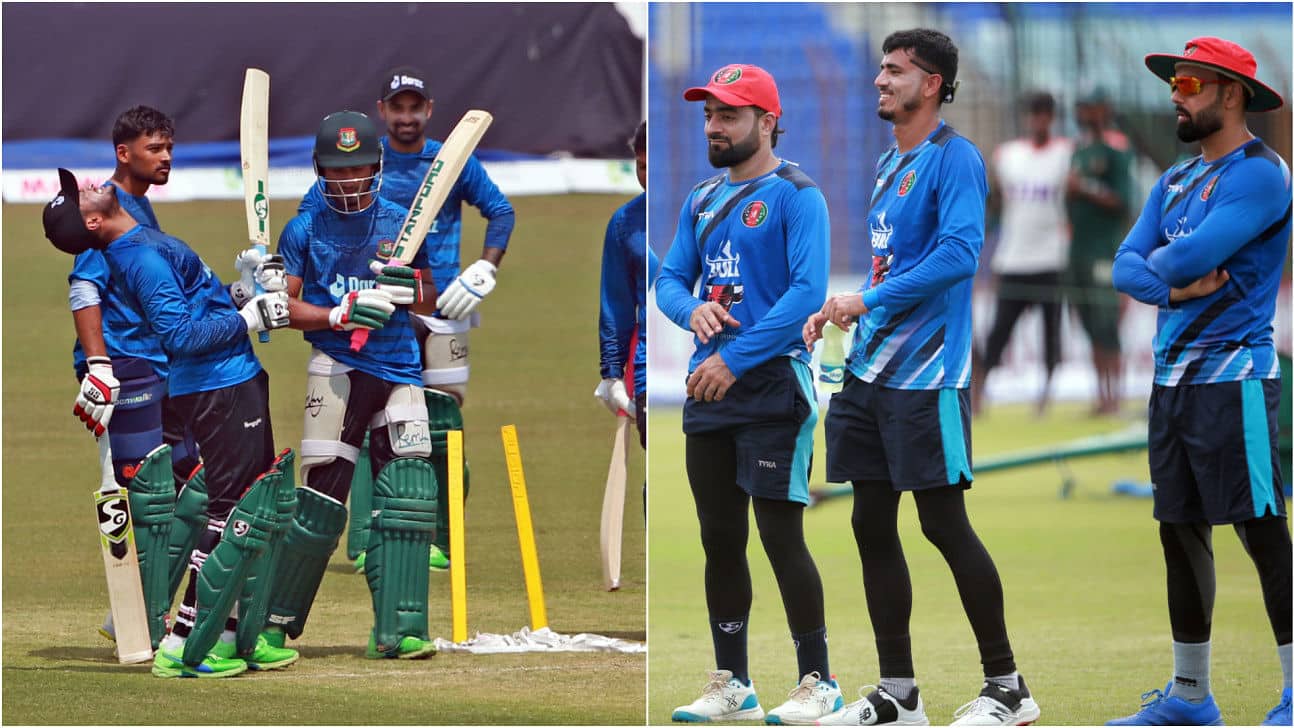
Bangladesh’s current situation in the ongoing Afghanistan series best be described as desolate.
Despite having experienced bitter losses in the past, the team’s morale has taken a hit after their recent records established them as a high-flying ODI side and they stumbled at home with a series setback.
On Tuesday, in the series-clinching third and final ODI against Afghanistan, the Tigers will need to be able to mentally recover from the series’ setbacks while also recovering some pride.
In the framework of the next three months, however, the task of rebuilding the team for upcoming important tournaments is a formidable obstacle.
The next Asia Cup and World Cup present a crucial opportunity to not only learn how Afghanistan has gained a competitive edge but also how to neutralize it.
A greater managerial effort is necessary in the context of restoring the team’s morale.
The Tigers’ batting confidence appears to have taken a hit after two disappointing performances in One-Day Internationals (ODIs).
The top order struggled against Fazalhaq Farooqi, and when the Afghan spinners entered the game, they struggled even more to read deliveries.
Finding solutions to these issues will greatly aid Bangladesh in attaining their goals at the World Cup, which will begin with a match against Afghanistan. In the third ODI, it will be exciting to see what counter plans the team’s brain trust comes up with.
Coming back into the team at number seven in the batting order, Afif Hossain has yet to create an impact for the Tigers. In the most recent one-day international series, Afif and Mehedi Hasan Miraz led their team to win over Afghanistan.
Nic Pothas, an assistant coach in Bangladesh, had the right idea when he suggested they not randomly replace the player in the position.
That’s a question for the coaches and not one I can answer. Two games have been played by Afif. If we are constantly making changes, the strain on the players will increase. It’s important to have faith in your players.
The No. 7 spot will depend heavily on the team’s ability to strike a good balance against a variety of opponents. When asked about Mahmudullah Riyad and Afif’s play, Pothas remarked, “It’s a game-by-game thing.”
The Tigers will need to handle their internal environment well over the lengthy break that will follow the ODI and T20I series. How the current skipper, Tamim Iqbal, fits into the situation is crucial.
The team’s leadership must consider not only if the captain can improve morale from outside the team’s surroundings, but also whether the transition for Tamim will go smoothly. If Tamim remains captain, the team’s ability to repair relationships, regain form, and prepare for the World Cup will hinge on his response upon his return.
The Tigers have a lot to prepare for, including the next assignments and the Afghanistan challenge.